Voicelink Uganda.
Community radio infrastructure for open speech data.
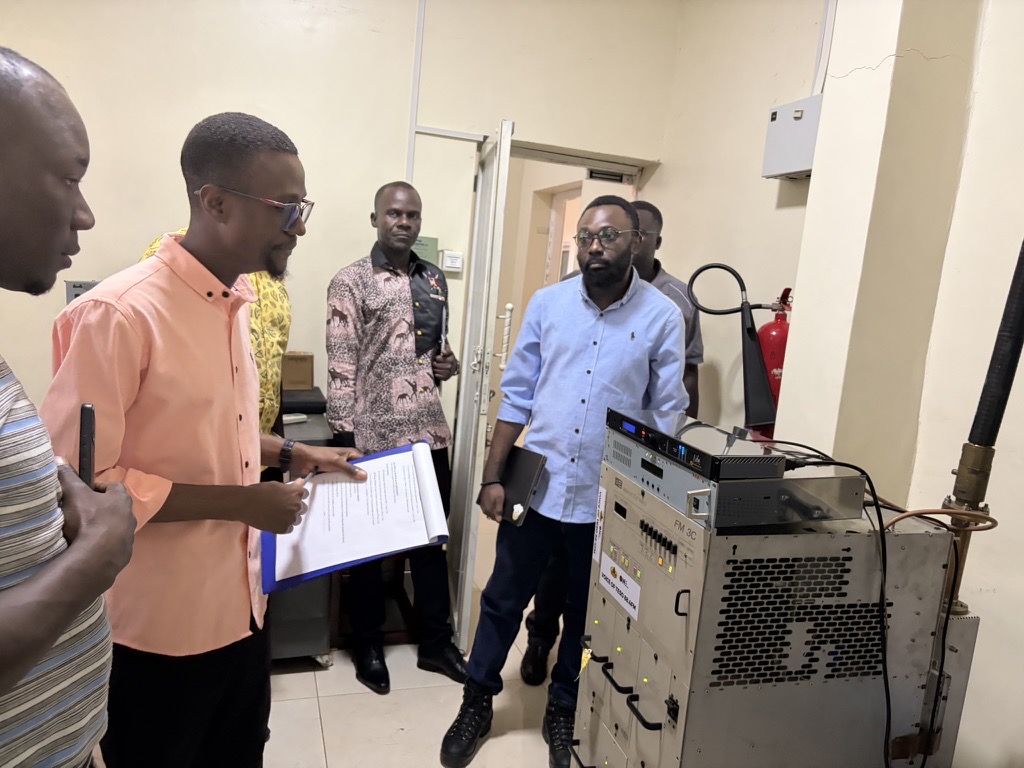 Hardware verification with radio partner Voice of Teso, Soroti, Uganda
Community radio for open speech data
VoiceLink Uganda turns community radio archives into open speech data. The project processes recordings, segments speech, records source and language metadata, reviews consent, and prepares datasets for reuse.
The data gap
Many languages lack the speech data needed for speech and language technology. Community radio stations already hold recordings of interviews, discussions, call in programmes, and public interest broadcasts.
These archives are often unstructured. VoiceLink provides a process for documenting, preparing, and governing them for reuse.
The VoiceLink pipeline
The pipeline covers station agreements, audio intake, segmentation, metadata, monitoring, and release review.
Station partnerships
Community radio stations provide audio that meets the project requirements.
Audio ingestion
Long recordings enter the processing pipeline.
Speech segmentation
Recordings are divided into speech clips.
Metadata
Each clip records its language, source, station, programme, and processing status.
Monitoring
A dashboard tracks audio through each stage.
Release review
Consent, quality, and publication requirements are checked before release.
How audio becomes data
Each recording follows the same process before release.
- 01Radio stations and community media partners provide audio.
- 02Long form recordings are ingested into the Voicelink pipeline.
- 03Audio is processed into shorter speech clips.
- 04Metadata is structured around language, source, station, programme context, and processing status.
- 05Data quality, consent, governance, and publication pathways are reviewed before reuse.
- 06Outputs can support open speech datasets, language technology, and public interest AI research.
Current outputs
The project has processed hundreds of hours of radio audio and produced thousands of speech clips. The dashboard reports the current figures.
Hundreds of hours
of radio audio processed
Thousands
of speech clips generated
Multiple
languages documented
Community
radio partners in Uganda
Data governance
VoiceLink records consent, source, processing status, and reuse terms before release.
Community benefit
Data use should return value to the communities that provided it.
Transparency
Each dataset records its sources and processing history.
Consent
Consent and programme context are recorded before release.
Data review
Data quality is checked before publication.
Pipeline dashboard
The dashboard tracks audio from intake to release.
Project partners
Voicelink Uganda has been supported by Mozilla Common Voice and is implemented by Neuravox Foundation with community radio partners in Uganda.
Support open speech data
We work with funders, radio stations, researchers, and language communities on open speech data.